
Leadership As a Valuation Factor (Reason #4 - Balance)
During the pandemic, I worked with a team whose senior leadership made a deliberate choice: don't tell people how bad things actually were. The intention was kind. They wanted to protect their team from unnecessary stress, so they reassured everyone that things were fine, even when they weren't, or just didn’t communicate the worst of things.
This policy backfired. The team had social media. They had each other. Whatever wasn't being said in the official channels got filled in anyway - through rumour, speculation, and quiet panic passed person to person. The vacuum between what leadership said and what people could see with their own eyes became more frightening than the truth would have been. The very stress leadership was trying to prevent is exactly what their silence created.
I see this dynamic often, always in the name of protecting a team. Whilst coming from a kind place, it very rarely helps in the short or the long term.
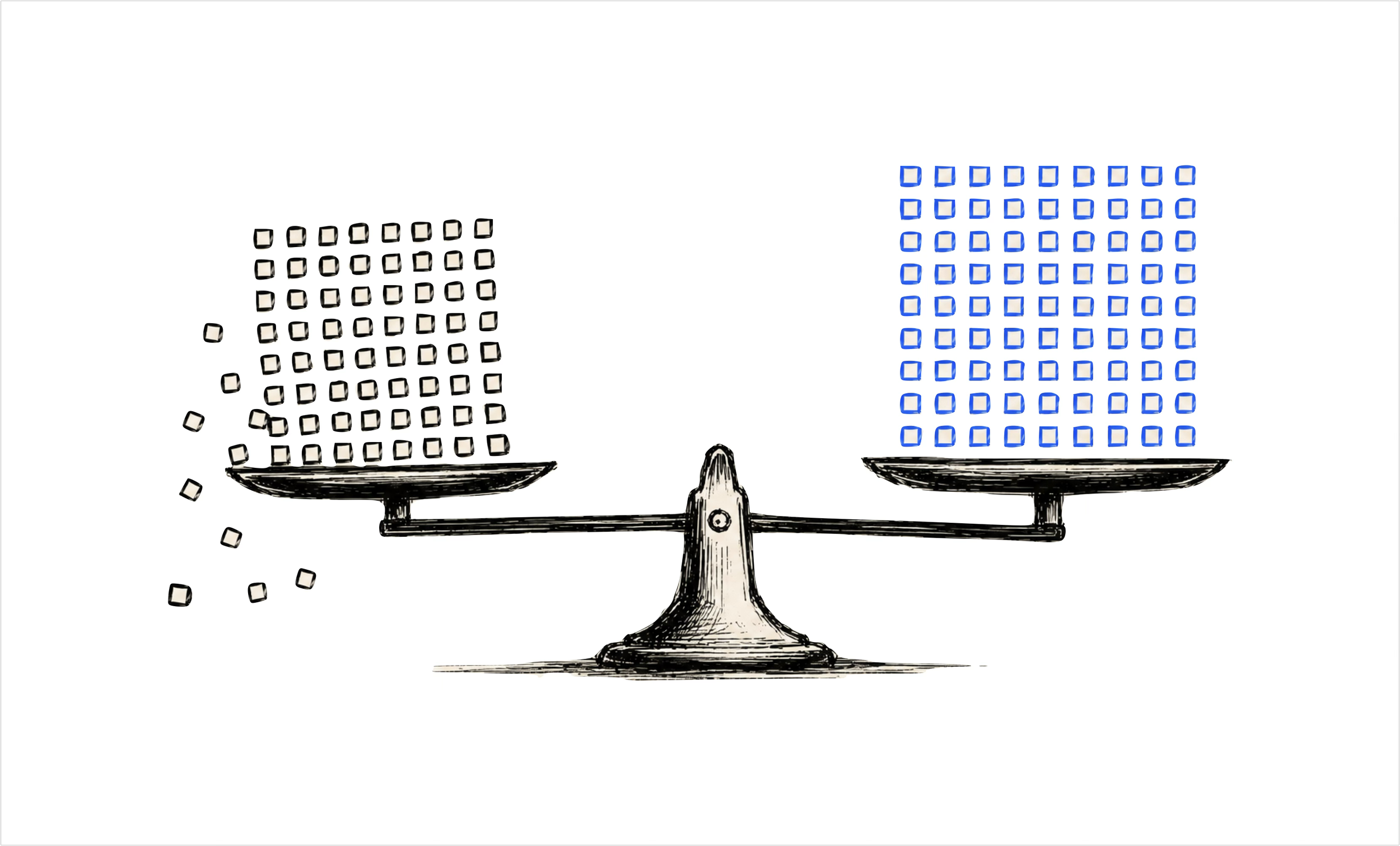
In the short term, the team carries a low but persistent hum of anxiety - not knowing is worse than knowing something difficult, because the mind fills silence with its own worst guesses. Not only that, but the teams we lead are intelligent professionals. They know when something is amiss, and so along with the low level tension comes something else. There is a questioning of leadership’s credibility; “Things are clearly bad - either they don’t see that (and are therefore inept), or they are trying to pull the wool over my eyes (and so not to be trusted).
In the long term, the cost is even more serious. Nervousness, doubt and suspicion compound over time - into reduced productivity through mistakes and inter-personal tension and even burnout - all the way through to talent churn. But there’s another long term cost. A team that's never been told the truth in difficult moments never has the chance to build resilience to difficulty. And this skill can't be manufactured the moment a real crisis actually arrives. By the time it does, it's too late to start practising.
The best leaders I've worked with handle this differently, and with perhaps one of the hardest skills to master - balance. Becuase what they do isn't full transparency either. Everyone can’t know everything always. What they do is something more specific: honesty about what's known, honesty about what isn't, and clarity about what's being done in response. "We don't know yet, but here's what we're doing" - said plainly, without inventing certainty that doesn't exist, and without going silent because the truth is uncomfortable. Discernment about what to share, but never silence and never fabrication.
This matters for valuation in a very direct way. The transition into private equity ownership is, for most teams, a genuinely stressful period - new expectations, new scrutiny, new pace. A team that's never had to sit with honest difficulty will struggle here, and struggling teams lose effort exactly the way the first piece in this series described - to confusion, to friction, to energy spent managing anxiety instead of doing the work. Every cycle a company goes through will have its own version of a difficult stretch. Balance is what determines whether a team meets it having practised, or meets it for the first time when the stakes are highest.